
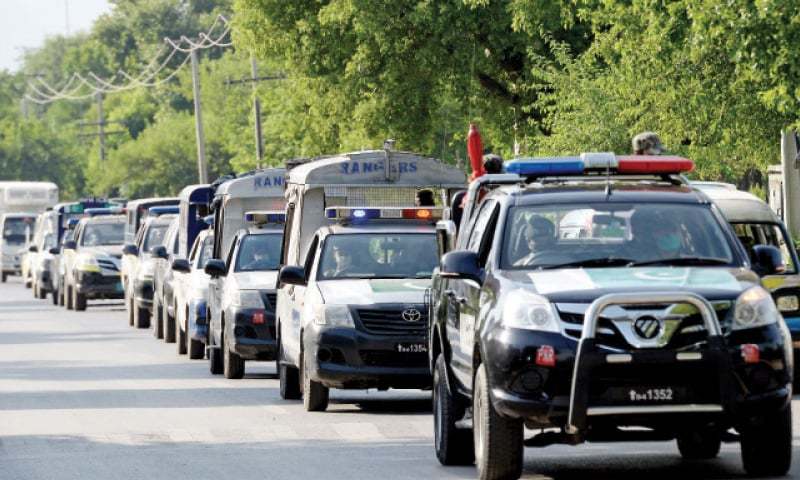
Pakistan’s military and diplomatic leadership moved to strengthen the nation’s security posture this week, simultaneously advancing long-term strategic alliances in North Africa while conducting intensified counter-insurgency operations along its volatile southwestern border. The dual developments highlight Islamabad’s current strategy of bolstering external defense partnerships while grappling with a sharp rise in domestic militancy.
Forging a Permanent Framework with Morocco
Defense Minister Khawaja Asif arrived in Rabat earlier this week for a significant three-day diplomatic mission aimed at formalizing defense relations with Morocco. During meetings with Moroccan Minister of State for National Defense Administration Abdel Latif Loudayi, officials laid the groundwork for an institutional framework designed to create permanent military links between the two nations.
Reports indicate that the primary objective of the visit is to sign a memorandum of understanding that will broaden the scope of future collaboration. According to statements released by the Defense Minister via social media, this agreement is intended to open new channels for military training, capacity building, and the exchange of operational experiences. He noted that the pact would serve as a foundation for joint initiatives across various security sectors.
This diplomatic push comes at a time when Pakistan is seeing increased interest from Muslim-majority nations regarding defense cooperation, a trend observers attribute to the performance of Pakistan’s military during a brief conflict with India in 2025. The current talks in Rabat build upon a history of growing cooperation; the two nations conducted their third joint bilateral military exercise in April of last year. Furthermore, high-level discussions took place in November 2024 between Moroccan Air Force leadership and Pakistan’s Chief of Air Staff, focused on potential aerospace collaborations.
Counter-Terrorism Operations in Balochistan
While diplomatic delegations worked to secure agreements abroad, security forces within Pakistan remained engaged in active combat. Recently, the military’s media wing confirmed that four militants were killed during an intelligence-based operation in the Kalat district of Balochistan. The Inter-Services Public Relations reported that the raid was launched following credible reports regarding the presence of armed combatants in the area.
During the ensuing exchange of fire, security personnel eliminated the suspects and recovered a cache of weapons and ammunition. Military officials described the deceased as being actively involved in numerous hostile activities and alleged that the militants were supported by Indian sponsorship. While New Delhi has consistently denied such accusations in the past, Pakistani officials stated that sanitization operations would continue in the region to root out any remaining threats.
Balochistan, which shares porous borders with Iran and Afghanistan, has long struggled with a low-level insurgency led by separatist groups such as the Balochistan Liberation Army and the Balochistan Liberation Front.
Rising Violence and New Prevention Strategies
The operation in Kalat occurs against a backdrop of escalating violence. Statistical data released by the Pakistan Institute for Conflict and Security Studies reveals a troubling trend, with combat-related deaths surging by 73 percent in 2025. The think tank recorded over 3,300 fatalities last year, a figure that includes more than 2,100 militants, over 600 security personnel, and nearly 600 civilians.
In response to this deteriorating security environment, the provincial government in Balochistan has shifted its tactical approach. A senior official announced the establishment of a modern threat assessment center designed to centralize intelligence gathering. Provincial administrators explained that this new facility would allow the state to move from a reactive stance to a preventative one, ensuring that scattered information is consolidated and acted upon before incidents can occur.

