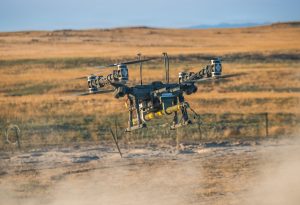

The French armed forces have established a definitive timeline for the integration of drone swarms, signalling a significant shift in military doctrine that will see autonomous units deployed within two years. According to revelations at the recent Forum Innovation Défense in Paris, the French Army and defense contractor Thales expect to field operational use cases by 2027, with widespread adoption following shortly thereafter as the requisite technology matures.
This development marks a significant departure from current drone usage and aims to fundamentally alter how Western militaries approach high-intensity conflict. By moving toward the Pendragon project, France’s initiative to create autonomous robot combat units, the military intends to combine land and air assets under a unified, AI-driven command structure.
Breaking the Tactical Deadlock
The primary driver behind this rapid modernization is the need to overcome the tactical deadlock currently observed in conflicts such as the war in Ukraine. Military strategists have noted that modern battlefields have become zones of hyper-lethality, where human movement near the frontline results in almost immediate detection and destruction. This reality has forced a rethinking of access-denial strategies.
France’s solution is to deploy complex swarm raids designed to penetrate enemy defenses without risking human personnel. Unlike the current operator-heavy model, these future swarms will be capable of suppressing enemy fortifications, jamming electromagnetic signals, and striking deep at communication nodes and logistics supply lines. The strategic value lies in the swarm’s ability to act as a force multiplier; by saturating a target area with numerous vectors, the collective unit can accomplish mission objectives even if significant numbers of individual drones are neutralized.
From Remote Control to Collective Autonomy
A critical distinction in France’s approach is the move away from the remote-control paradigm. While drone usage is widespread in Eastern Europe, operations typically rely on a 1-to-1 ratio of pilots to machines. French defense officials argue that this model does not represent true swarming and is difficult to scale due to the manpower required.
True swarm warfare envisions AI-enabled teams that sense, decide, and collaborate with minimal human oversight. The technology currently under development allows for dynamic leadership within the drone pack. If the designated leader of a swarm is destroyed, the artificial intelligence governing the group instantly reassigns that role to another unit, ensuring mission continuity. This resilience creates a battlefield dynamic where the destruction of individual assets no longer halts an offensive.
The Dehumanized Battlefield
The introduction of these systems points to a future in which frontline combat zones may be entirely devoid of human soldiers. French strategies anticipate an environment in which high-value, manned platforms operate alongside vast numbers of expendable, uninhabited machines.
This shift to robotization is intended to spare soldiers from the extreme lethality of the contact zone. However, it also introduces a psychological dimension to warfare described by officials as dehumanized combat. The prospect of facing autonomous machines that operate without fear or hesitation poses a new psychological pressure on opposing troops, distinct from traditional combat stressors.
Barriers to Deployment
Despite the optimism regarding the two-year timeline, the transition to swarm warfare faces hurdles beyond software development. Physical logistics remain a complex challenge; militaries must develop new infrastructure to transport, power, and sustain hundreds or thousands of drones in the field.
Furthermore, the reliance on artificial intelligence necessitates a new ethical and legal framework. Because these swarms operate autonomously, human operators must be retrained to understand algorithmic deviations and maintain accountability for the system’s actions. As France moves to finalize the Pendragon project, the focus is now shifting from the theoretical capabilities of AI to the hard realities of integrating these wolf packs into the physical and legal architecture of the armed forces.