
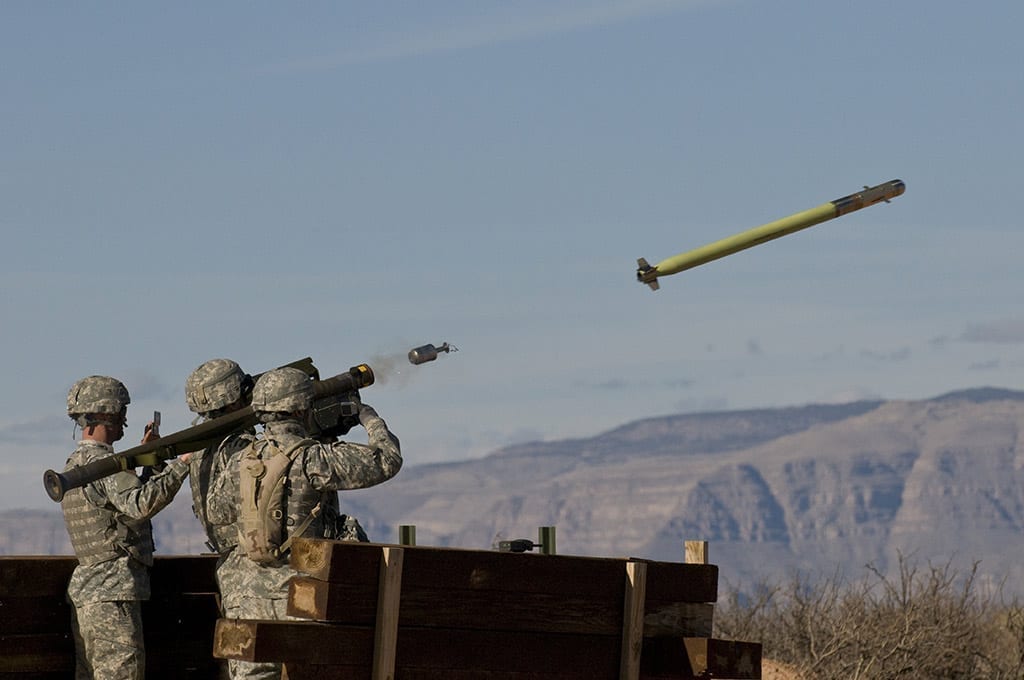
The United States Army is actively taking steps to retire the decades-old FIM-92 Stinger in favor of a highly advanced alternative. Military officials recently released a formal request seeking defense contractors capable of manufacturing an estimated eleven thousand Next Generation Short Range Interceptor missiles. This procurement initiative is designed to modernize the military’s mobile defense capabilities against increasingly sophisticated airborne threats, with an initial deployment goal set for the 2028 fiscal year.
Enhanced Speed and Capabilities
The legacy Stinger missile system relies on standard solid-fuel rocket motors, limiting its maximum velocity to roughly twice the speed of sound. The upcoming interceptors are expected to travel significantly faster, reaching speeds up to Mach three.
This boost in performance is attributed to the integration of more potent rocket propulsion technologies, which defense firms such as Northrop Grumman and RTX successfully evaluated during the previous calendar year. Recent demonstrations by RTX earlier this year also verified the new interceptor’s ability to track unmanned aerial targets and launch successfully from portable systems carried by individual soldiers. The military envisions these modern interceptors as highly versatile, self-guiding weapons capable of effectively neutralizing hostile helicopters, traditional airplanes, and various classes of medium-sized uncrewed aerial vehicles.
Integration with Modern Vehicles
This technological upgrade falls under the broader Maneuver Short Range Air Defense initiative, a comprehensive program designed to protect ground forces from drones, guided munitions, and hypersonic weaponry. The program is unfolding in several phases.
The initial phase resulted in the creation of the Sergeant Stout, a modified Stryker combat vehicle equipped with radar, machine guns, cannons, and the current Stinger system. A subsequent phase explored integrating high-powered laser weapons onto similar ground vehicles.
Now, the military is focusing on adapting the Sergeant Stout fleet to accommodate the newer interceptors. Defense contractors are expected to outline a strategy and pricing model for outfitting nearly 250 of these combat vehicles with universal launch compatibility. Furthermore, the updated interceptors will remain functional alongside other existing military hardware, including systems utilized by the Marine Corps.
Phased Rollout and Production Timeline
The military requires interested companies to submit their proposals by early July. These proposals must account for a ten-year manufacturing window, providing cost estimates for the complete inventory of 11,000 missiles and over 2,000 specialized control launch assemblies.
The initial rollout phase expects the delivery of 200 missiles and 20 launch mechanisms during the first year. The second year increases the anticipated order to 500 missiles and 20 launch units. Planners are also asking contractors to calculate the financial impact of doubling these early production quantities to accelerate fielding.
Retiring a Historic Weapon
This transition marks the twilight of the Stinger’s long service history. First introduced in the early nineteen-eighties to succeed older anti-aircraft platforms, the portable weapon became a defining element of late Cold War conflicts. It gained particular prominence during the Soviet-Afghan War when it was utilized effectively against armored helicopter gunships. Today, the rapid evolution of drone warfare necessitates a more advanced, faster-acting successor to ensure ground troops maintain superiority against modern aerial adversaries.


