
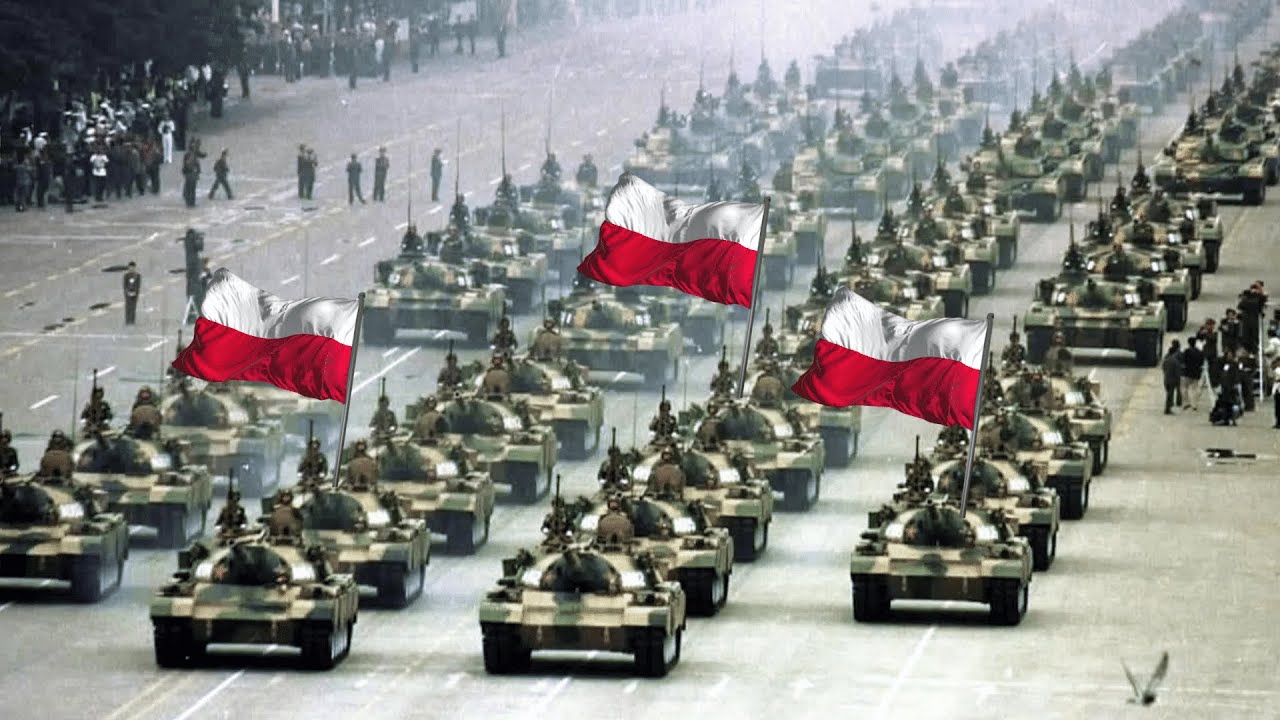
The Polish Ministry of National Defense recently finalized a procurement initiative, allocating roughly $16.5 billion to domestic defense contractors. These agreements are being utilized to heavily modernize the nation’s military capabilities by acquiring a vast array of infantry fighting vehicles, self-propelled artillery, and mortar systems.
To finance this ambitious military expansion, Warsaw is tapping into the European Union’s Security Action for Europe program, a low-cost loan initiative intended to help member states upgrade their defense infrastructure. Out of the European bloc, Poland is the largest potential recipient of this funding, with access to nearly $51 billion in available credit lines. The substantial financial injection highlights a broader effort to fortify the country’s borders amid rising regional tensions.
Expanding the National Arsenal
Under the newly finalized agreements, the Polish military will receive hundreds of heavily armored assets. The procurement roster features 146 Borsuk tracked infantry fighting vehicles, alongside 96 Krab 155mm self-propelled howitzers. Additionally, the military will integrate 1,000 command-and-communications support vehicles for its Homar-K multiple rocket launcher systems, plus 64 Rak 120mm self-propelled wheeled mortars.
A consortium headed by the state-owned defense enterprise PGZ secured these lucrative manufacturing contracts. The signing ceremony took place at the headquarters of Huta Stalowa Wola, a key subsidiary responsible for outfitting the nation’s land forces. Defense leaders highlighted that these investments will satisfy immediate national security needs while simultaneously elevating the country’s manufacturing capacity to support future international export opportunities.
Internal Political Clashes Over Funding
Securing the European financing involved significant domestic friction. The nation’s right-wing president vetoed the initial legislation required to access the Brussels-backed loans, expressing apprehension that the European Union might use the mechanism as leverage to arbitrarily withhold capital. Consequently, the centrist governing cabinet bypassed the presidency, relying on executive action to advance the funding.
The current defense minister defended the financial strategy, arguing that the European loan conditions are twice as advantageous as the terms negotiated by the previous administration for South Korean military acquisitions.
Conversely, the former defense minister warned that using European loans could invite foreign interference in the types of military hardware Warsaw is permitted to purchase. He cautioned that this funding trajectory might steer purchasing habits toward European suppliers, potentially alienating the United States and negatively impacting Poland’s long-standing strategic alignment within NATO.
Ammunition Independence and Global Partnerships
Despite domestic anxiety over supply chain shifts, current defense leadership reassured the public that massive, multi-billion-dollar procurement deals with the United States remain entirely intact and unaffected by the new European financial framework.
Beyond heavy vehicles, the defense ministry also prioritized stockpiling artillery ammunition, drawing direct strategic lessons from the ongoing conflict in neighboring Ukraine. An additional contract worth billions was awarded to produce several hundred thousand 155mm artillery rounds locally.
Defense executives confirmed that the entire manufacturing process will take place domestically to ensure complete supply chain autonomy. This industrial self-reliance is further supported by an agreement established late last year with a British defense contractor, which is currently providing the necessary technological expertise to accelerate Poland’s domestic artillery manufacturing.
Strategic Autonomy and Future Readiness
As Poland continues to navigate the complex security landscape shaped by the ongoing conflict in Ukraine, this latest round of military investments signals a profound shift in its long-term defense strategy. By aggressively expanding its domestic manufacturing base and securing independent supply chains, Warsaw is transforming itself into a heavily fortified military hub in Eastern Europe.
The massive influx of European capital not only accelerates the immediate modernization of the armed forces but also establishes the foundation for the nation’s defense industry to eventually become a competitive exporter on the global market. Moving forward, the government’s primary challenge will be successfully balancing this unprecedented European financial integration with its foundational security commitments to the United States and the broader NATO alliance.

