The United States is moving closer to deploying high-energy laser weapons on American soil for air defense following a safety agreement between the Department of Defense and the Federal Aviation Administration. This development addresses the escalating threat of inexpensive, weaponized drones and establishes a framework for using directed energy weapons within the national airspace.
The agreement comes after a comprehensive safety assessment concluded that these countermeasures can be operated without creating unnecessary risks to commercial and civilian aircraft. This formal understanding is a critical first step toward a future where a laser dome could protect critical areas from aerial threats.
Border Incidents Spark Safety Review
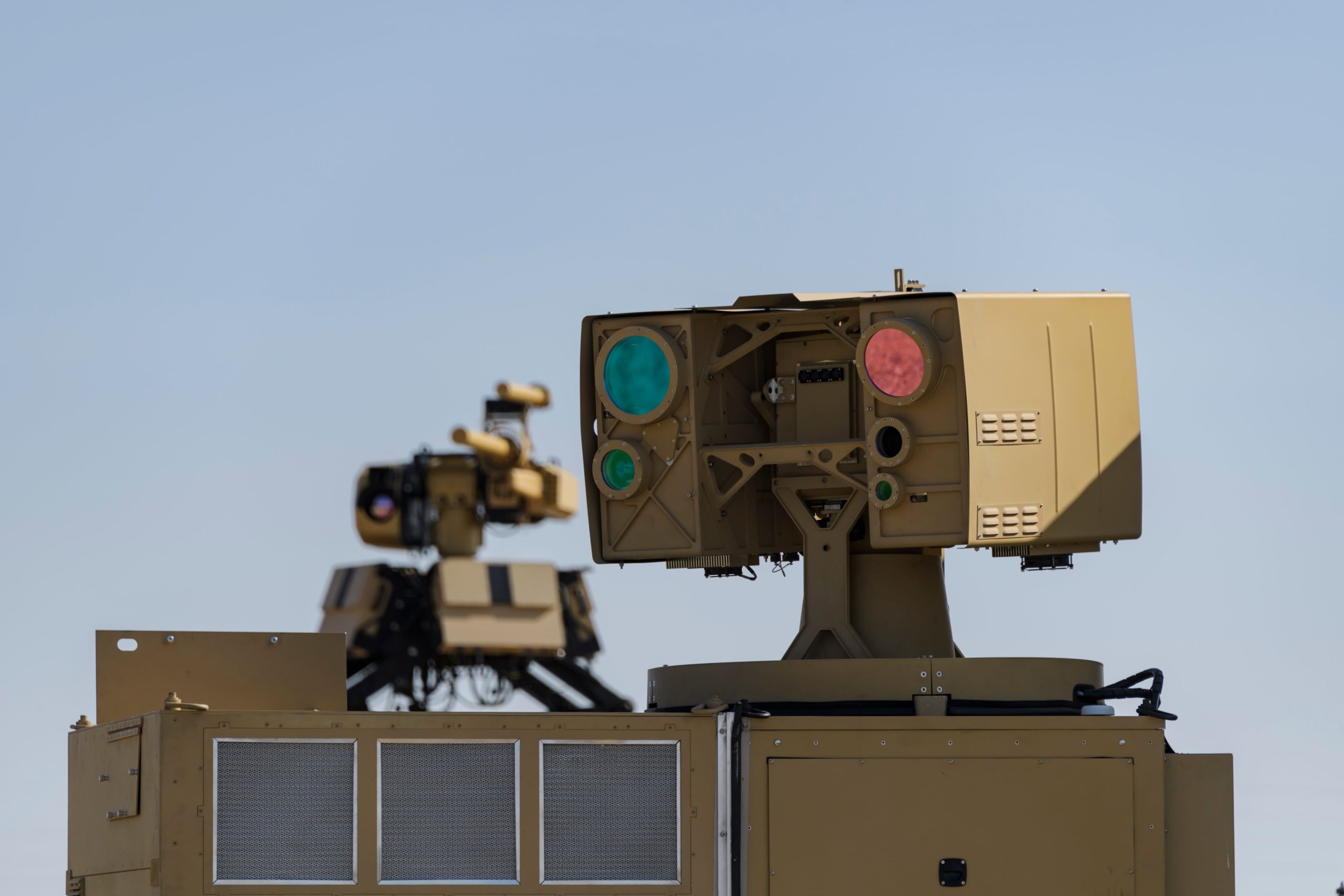
The push for a formal safety protocol was accelerated by two incidents in February along the U.S.-Mexico border in Texas. In both cases, the U.S. Army’s 20-kilowatt vehicle-mounted laser system, known as the AMP-HEL, was activated, leading to abrupt and precautionary shutdowns of nearby airspace.
The first event occurred on February 11 near El Paso, when Customs and Border Patrol personnel, using a laser on loan from the Pentagon, engaged an unknown target. A second incident took place on February 27 near Fort Hancock, where military personnel used another laser system to target what they perceived as a threatening drone, which was later identified as belonging to the CBP. These events highlighted the urgent need for clear regulations governing the use of such weapons in civilian airspace to prevent confusion and disruption.
Rigorous Testing Confirms Laser Safety
In response to the February airspace closures, the FAA and the Pentagon’s Joint Interagency Task Force 401 conducted an exhaustive safety evaluation at White Sands Missile Range in New Mexico in early March. The assessment focused on the LOCUST Laser Weapon System, the platform on which the Army’s AMP-HEL is based.
The tests yielded two crucial conclusions. First, the system’s automated safety mechanisms are highly reliable. The laser has a series of internal checks that must all give a go signal before it can fire, effectively preventing accidental discharge. If any condition is deemed unsafe, the system will not engage, regardless of operator input.
Second, the evaluation sought to dispel myths about the destructive power of lasers over long distances. Investigators fired the laser at its maximum effective range at the fuselage of a grounded Boeing 767 airliner. The results demonstrated that even a sustained, eight-second blast at full intensity caused no structural damage to the aircraft, confirming that the laser’s energy dissipates significantly over distance and does not pose a catastrophic threat to aircraft at cruising altitudes.
A New Strategy for a New Threat
The appeal of laser weapons for domestic defense is growing as drone warfare becomes more common. While conventional interceptors like missiles are effective, their use over populated areas carries a high risk of collateral damage.
Furthermore, using expensive munitions to counter the thousands of low-cost drones operated by cartels and other actors is not financially viable. Lasers offer a low-cost-per-shot alternative with a virtually unlimited magazine, making them an ideal solution for domestic counter-drone operations.
This approach is not without international precedent. France deployed lasers to protect the 2024 Paris Olympics, and China has used similar systems to secure military parades. The United Kingdom and even the Pentagon have also explored using directed energy to defend critical infrastructure and government facilities.
Hurdles on the Horizon
Despite the landmark agreement, a widespread network of defensive lasers is not imminent. The new accord does not yet clarify the crucial issue of final engagement authority when military, federal, and civilian jurisdictions overlap, the very ambiguity that led to the February incidents. Until a clear chain of command is established, deploying these systems in a fast-moving crisis remains complicated.
Additionally, the U.S. military’s current inventory of operational laser weapons is limited. While there are ambitious plans to scale up production and development, particularly under the current administration’s Golden Dome for America missile shield initiative, the age of silent laser sentinels guarding the border and critical infrastructure remains a future prospect. The recent agreement, however, lays the essential groundwork for that future to become a reality.