In 2025, global military expenditure climbed for the 11th consecutive year, reaching a record total of nearly $2.9 trillion. This increase reflects escalating global conflicts and geopolitical tensions. The overall 2.9% real-terms increase is the smallest annual rise since 2021, a figure skewed by a temporary decline in the United States’ military spending. Excluding the U.S., global military spending surged by a substantial 9.2%, revealing the true momentum of worldwide militarization.
Europe and Asia Lead the Charge
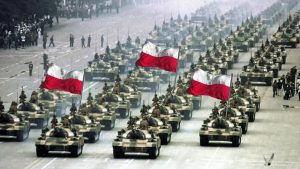
Europe and the Asia-Oceania region were the primary drivers of this growth. European nations collectively increased military budgets by 14% to a record $864 billion, the fastest annual increase for European NATO members since 1953. Germany increased its spending by 24% to $114 billion, surpassing the 2% of GDP threshold for the first time since 1990. Spain’s budget leaped 50% to $40.2 billion, also crossing the 2% GDP mark, while Poland allocated 4.5% of its GDP to defense, the highest among NATO allies.
In Asia and Oceania, combined expenditure grew 8.1% to $681 billion, the region’s sharpest increase since 2009. China’s spending grew by 7.4% to $336 billion, its 31st consecutive annual increase. In response, Taiwan increased its budget by 14% to $18.2 billion, its largest rise since 1988. Japan’s spending reached $62.2 billion, or 1.4% of its GDP, the highest military burden for the country since 1958.
The Economic Realities of Conflict
The war between Russia and Ukraine, now in its fifth year, continues to strain both economies, though the scale of the burden differs drastically. Russia’s military spending was estimated at $190 billion, accounting for 7.5% of its GDP and 20% of its total government expenditure. While this represents a massive mobilization of national resources, it is dwarfed by the existential pressure on Ukraine. Ukraine’s defense spending reached $84.1 billion, a staggering 40% of its GDP and 63% of all government spending. This means nearly two-thirds of the Ukrainian government’s entire budget is consumed by the war effort, highlighting an unprecedented economic burden as the nation pours nearly half of its total economic output into survival.
An Anomaly in US Spending
In contrast to the global trend, the United States military spending decreased 7.5% to $954 billion. This decline was not a policy shift but an accounting consequence of the failure to pass new supplemental aid for Ukraine in 2025. This dip is considered temporary, as the U.S. Congress has already approved over $1 trillion for 2026, with spending projected to rise further.
A Future of Heightened Tensions
The 2025 data indicates a new era of intensified military competition. Total NATO spending reached $1.581 trillion, or 55% of the global total, but transparency concerns are growing. The alliance’s new target of 5% of GDP by 2035 allows for vaguely defined defense- and security-related expenditures, raising fears of creative accounting that could obscure true military capacity. The overarching trend is one of global rearmament, from Eastern Europe to the Pacific. This historic surge in spending signals a collective global shift towards prioritizing hard power in an increasingly unstable world.