The military maneuver known as breaching is widely considered one of the most hazardous operations a combat engineer can undertake. Clearing a path through enemy defenses traditionally requires personnel to advance directly into hostile obstacles, a tactic that military planners anticipate could result in casualty rates as high as fifty percent for the assigned forces.
In an effort to mitigate these staggering potential losses, the United States Army is actively exploring the use of unmanned aerial systems to perform these perilous tasks. Recently, combat engineers from the Oregon Army National Guard demonstrated a novel approach by using a heavy-lift drone to transport and deploy explosive-clearing charges through simulated enemy fortifications.
Testing Grounds in the Idaho Sky
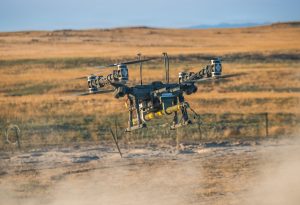
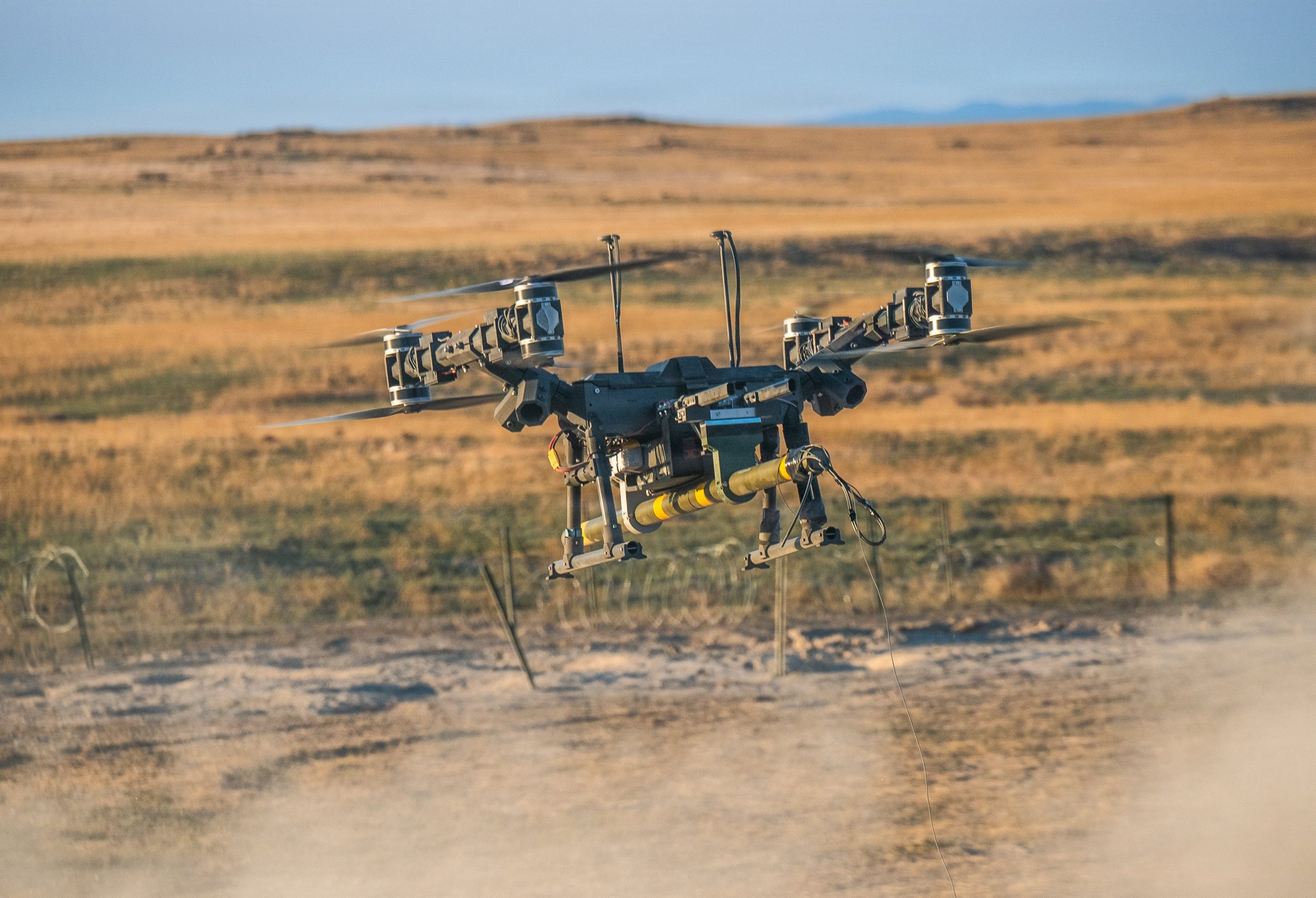
The practical application of this concept was recently executed at the Orchard Combat Training Center in Idaho. Personnel from the Oregon National Guard successfully navigated a commercial drone carrying a live explosive device through challenging weather conditions, which included wind gusts reaching twenty-five miles per hour. The unmanned system delivered an explosive-filled tube, commonly referred to as a Bangalore torpedo, directly onto a concertina wire obstacle. Following the delivery of the charge, the operators retreated to safety before detonating the explosive, effectively clearing a path through the wire without exposing human troops to the immediate blast zone.
Inspiration and Innovation
This successful demonstration culminated from extensive research conducted by a specialized drone working group within the engineering battalion. Leadership established this team to explore methods for clearing obstacles utilizing commercially available unmanned technology.
The initiative was heavily inspired by contemporary conflicts, particularly the ongoing war in Ukraine, where the continuous and innovative use of drones has fundamentally altered battlefield dynamics. Observing these modern adaptations motivated the engineering unit to conceptualize larger-scale, unmanned solutions for traditional combat challenges. After evaluating various commercial models at significantly different prices, the military team partnered with a technology firm to develop a specialized aircraft for the mission.
Technical Capabilities and Execution
The operation utilized a forty-five-pound drone, specifically engineered with eight motors and twenty-eight-inch propellers, capable of lifting up to 200 pounds into the air. During the trial phases, the engineering team initially practiced with inert dummy charges to ensure reliable targeting and delivery before advancing to live munitions. To protect the operation against electronic interference or premature detonation, the engineers opted for a physical shock tube connection to trigger the explosives, deliberately avoiding wireless detonation methods that could be compromised by enemy jamming equipment.
Advancing Autonomous Capabilities
The broader military landscape is already shifting toward remote tactical operations, with other airborne divisions currently experimenting with drones to deploy grappling hooks and specialized munitions for obstacle clearance.
Looking ahead, military engineers anticipate that future breaching technologies will require minimal human intervention. Next-generation prototypes are expected to integrate artificial intelligence to autonomously identify obstacles, position the aircraft, and deploy the explosives. By processing these targeting decisions internally without relying on external signals, these advanced systems would be theoretically immune to electronic warfare jamming, further securing the safety and effectiveness of combat engineering missions.