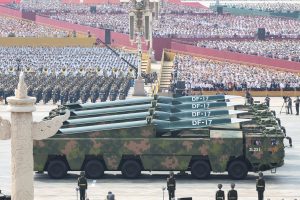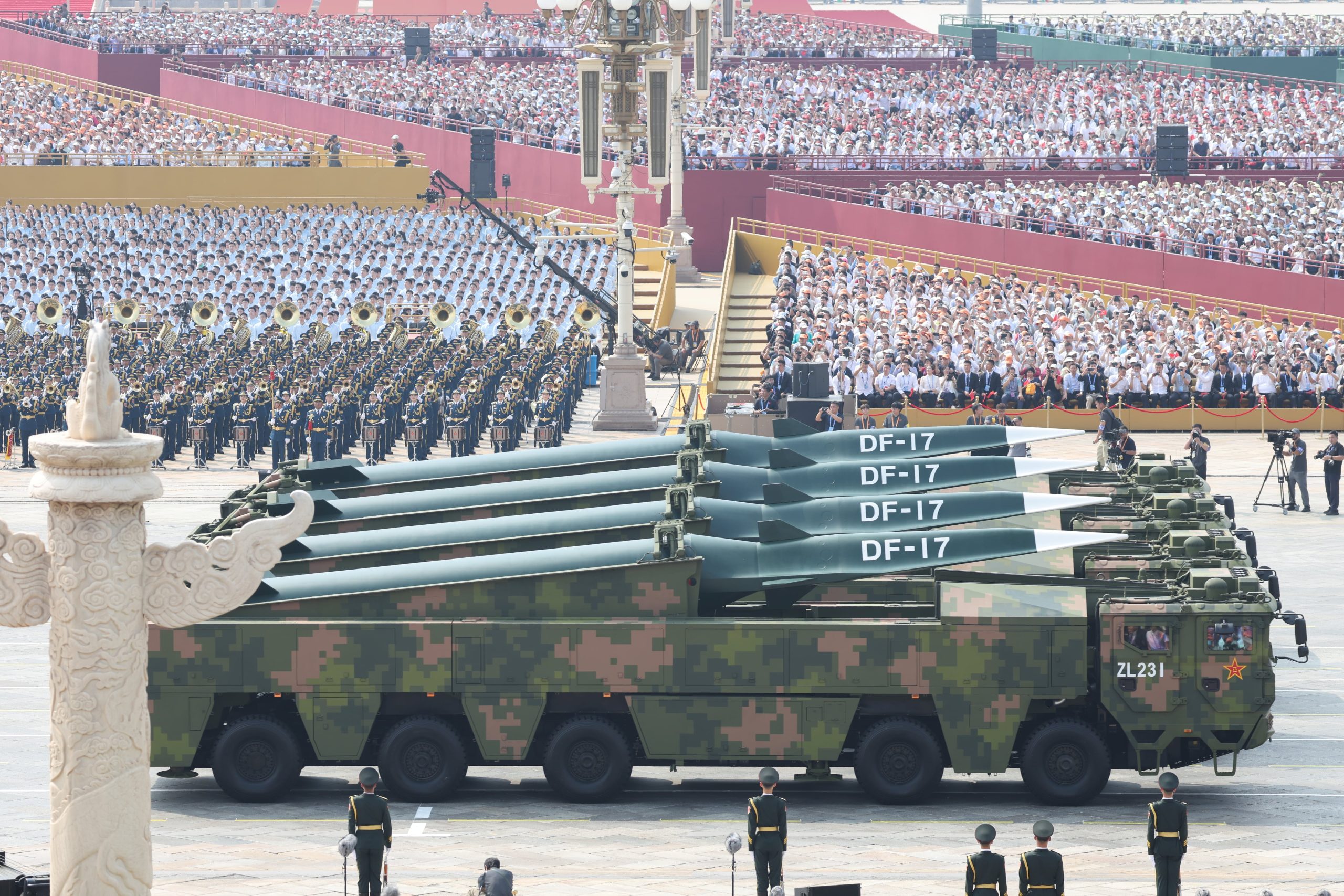
In June, Chinese state media broadcast unprecedented footage of the Dong Feng-17 ballistic missile, bringing a weapon that has been quietly developed for over a decade into the public spotlight. English-language broadcasts presented the system as a cornerstone of the People’s Liberation Army arsenal. Military analysts observe that this highly publicized display serves as a calculated warning to the United States and its regional partners. The broadcast highlights Beijing’s intent to demonstrate a formidable asset capable of inflicting severe damage during any potential armed conflict in the Asia-Pacific theater.
Technological Edge and Evasive Maneuvers
The DF-17 stands out from legacy ballistic systems primarily due to its integrated hypersonic glide vehicle. This advanced technology enables the weapon to fly at lower altitudes and change course unpredictably mid-flight, making it significantly more difficult for traditional anti-missile networks to track and intercept. Defense researchers note that such high-speed maneuverability poses a severe risk to massive surface vessels, including aircraft carriers and amphibious assault ships.
Furthermore, state-run media reports assert the mobile weapon system can be deployed in any weather condition without relying on fixed launch facilities. This mobility theoretically enables coordinated mass strikes designed to systematically overwhelm regional defense grids. Technical data from defense organizations indicates the missile measures 36 feet in length, has a striking range of roughly 1,100 to 1,550 miles, and can deliver either conventional or nuclear payloads. Current estimates suggest the Chinese military maintains an inventory of well over a thousand of these missiles, paired with hundreds of mobile launchers.
Timed Signaling Amid Indo-Pacific Exercises
The timing of this public reveal closely aligns with major international military maneuvers, including the multinational Rim of the Pacific maritime exercises near Hawaii and recent collaborative drills between American and Japanese forces. International relations scholars interpret the footage as a direct counter-message to these allied operations. By showcasing its capacity for evasion and saturation strikes, Beijing is signaling growing confidence in its ability to complicate the operational strategies of rival militaries.
Observers believe the deployment of such a premier strategic asset would likely be reserved for high-stakes geopolitical emergencies, particularly those involving foreign military intervention regarding the self-governed island of Taiwan, which Beijing claims as its sovereign territory. Additionally, heightened surveillance by American forces stationed in Japan, Guam, and Hawaii coincides with escalating maritime disputes between China and the Philippines.
The Push for Mutual Deterrence
To counter the unique threat posed by these maneuverable glide vehicles, defense specialists argue that adversarial forces must dramatically enhance long-range radar networks. Improved detection capabilities would be vital for identifying mobile launch units early enough to execute preemptive strikes before launch.
Meanwhile, the United States is actively pursuing parallel military technologies to close the gap. American defense initiatives include the creation of the military’s Long-Range Hypersonic Weapon program, intended to strike heavily fortified targets across vast distances, alongside new defensive hardware specifically engineered to neutralize incoming hypersonic threats. Security analysts emphasize that Washington will need to rapidly expedite the rollout of its own advanced projectile systems to establish a balanced and credible deterrence posture across the increasingly tense Indo-Pacific region.